From Structure to Story
When I first started restoring dollhouses, I thought I was bringing old houses back to life.
Somewhere along the way, I realized that wasn't really what was happening.
A restoration always begins the same way. An empty house sits on my dining room table.
I walk through it room by room, making a list of what needs attention. Missing trim. Damaged windows. Loose flooring. Walls that need repair.
At first, that's all I see. A project.
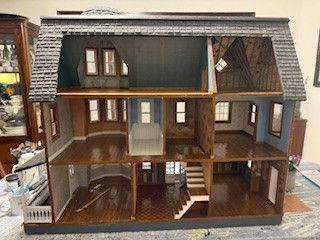
But there's always a moment when something changes.
It isn't when the paint is finished.
It isn't when the last piece of furniture is placed.
It's much quieter than that.
I stop thinking about the work that's left to do and begin wondering about its past and the people who loved it.
Who built this house?
Who was it meant for?
Why was it saved?
What happened between the day it was started and the day it found its way to me?
Once those questions arrive, the restoration changes. I'm no longer trying to make a dollhouse beautiful. I'm trying to understand it.
That shift has quietly changed the way I work. Instead of asking, "What can I change?" I find myself asking, "What should I protect?"
Sometimes the answer is a piece of original woodwork.
Sometimes it's an old floor that's been worn smooth.
Sometimes it's a tiny door with a crystal knob that waited more than thirty years to be installed.
Those details remind me that every house has already lived a life before I ever picked up a paintbrush. My role isn't to erase that history. It's to build on it.
Looking back over these past few months, I can see that every house has been teaching me the same lesson. A dollhouse is never just a collection of tiny rooms. It's a place where someone's time, hope, and imagination still exist.
Once I understood that, I stopped seeing restoration as the process of fixing old houses.
I started seeing it as the privilege of helping their stories continue.


Comments