The Things We Keep Alive
An unexpected evening of Turkish music, old traditions, and the things we carry forward.
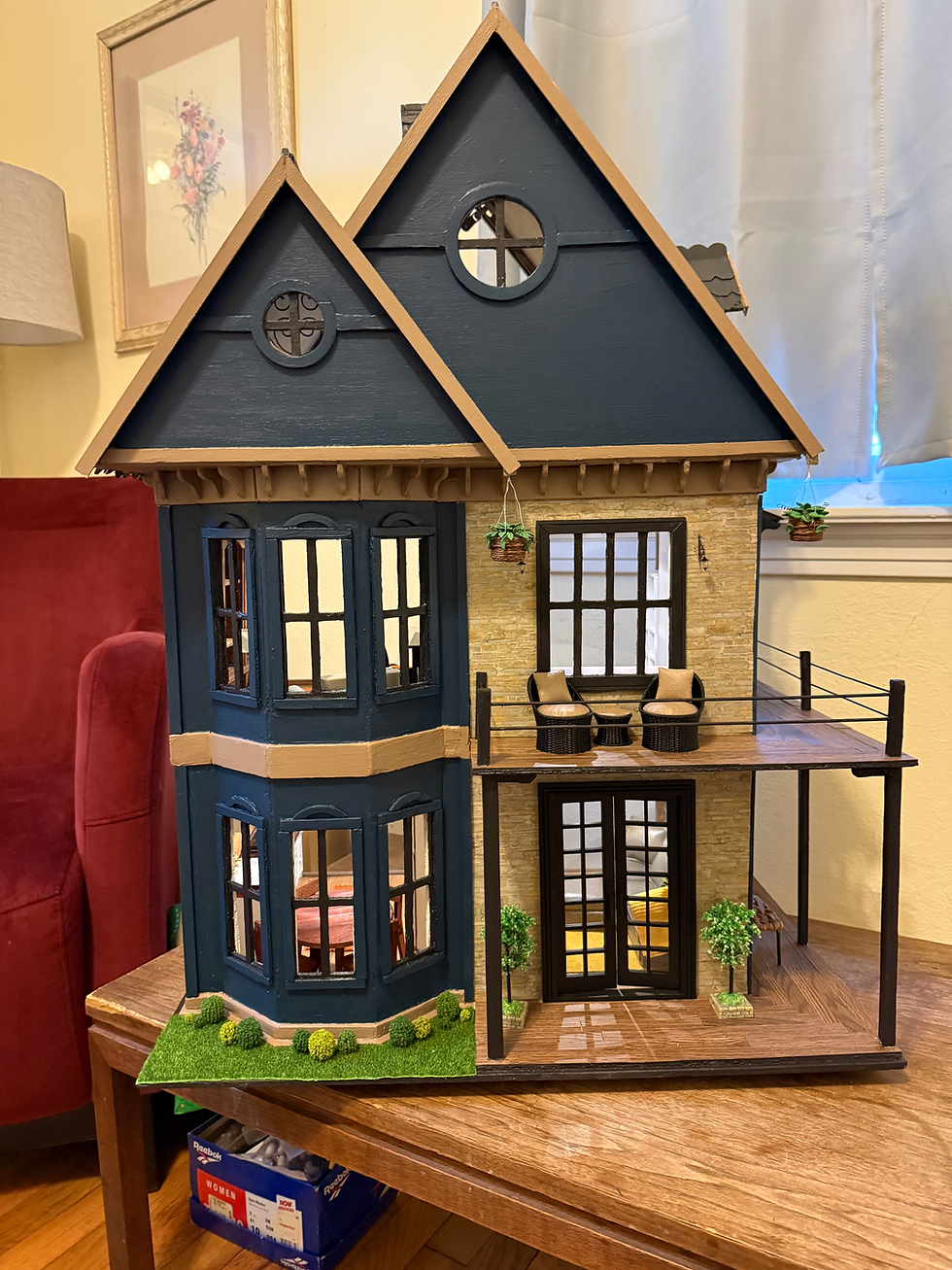
I had an entirely different Saturday planned. I was finishing a commissioned dollhouse that needed to be delivered the following morning. All that remained were the final little details. I needed to inspect the exterior paint, touch up anything I'd missed, pack the interior furnishings, and load the car. I thought perhaps my husband and I might even find time to go to a movie.
Around noon, he casually announced that we were having company. "Hey babe, that musician I met is coming over tonight. He's going to play some music." I've been married to a Turk for thirty years, so this sort of announcement wasn't entirely unexpected. Usually, it means a couple of our friends who play the saz are coming over, and we'll spend a few hours listening to traditional Turkish songs. I assumed this would be something similar.
Around two o'clock, my husband started calling friends. A visiting musician was coming over, and he thought a few people might like to join us. It was Saturday afternoon, and I assumed most everyone would already have plans. Apparently, I underestimated the appeal of an evening of Turkish music.
I had four hours to clean the house, organize dinner, and make sure there was enough rakı. I set the dollhouse aside, although I did manage to finish it and put it on a special table in the living room in case anyone wanted to see it. I also pulled meat out of the freezer and put it in the Instant Pot. I've learned something about Turkish gatherings over the years. When a group settles in for a long evening of music, food, and drinking, eventually someone is going to want soup. It doesn't matter how much everyone ate at dinner. Several hours later, another meal becomes necessary. I've come to think of it as a second or third dinner.
By six o'clock, people were arriving. Our special guest was Uğur Önür, a Turkish folk musician whose efforts to preserve traditional music I deeply admire. He arrived with two companions, and the three of them walked into our house carrying their instruments, apparently expecting a traditional Turkish music gathering. And that's exactly what they got. At one point, there may have been twenty people in the house. Some couldn't stay late, but a large group settled around the dining room table and remained there for hours. And when I say remained, I mean they hardly moved.
We began with chicken and bulgur, mezes, salads, and cheeses. As the evening continued, I worked my way around the table, collecting empty plates and replacing them with fruit, nuts, sweets, and more cheese to accompany the rakı. There was never really a moment when dinner ended and the evening moved on to something else. The table was the evening. Someone would begin another song, everyone would join in, and then there would be laughter, conversation, and the occasional burst of tremendous cheering. At one point, I brought out wooden spoons, and a couple of our guests began playing rhythms against their legs. When someone played particularly well, the room erupted in applause. Apparently, spon playing was something worth celebrating.
What fascinated me was how naturally it all happened. Many of these people barely knew one another when they arrived. Yet within a few hours, they were laughing, teasing one another, and singing together as though they'd been friends for years. There was none of the self-consciousness I so often notice at American social gatherings. Nobody seemed worried about whether they sang well or whether they were drawing too much attention to themselves. They knew these songs, loved them, and were perfectly comfortable expressing how they felt.
At one point, Uğur began playing Uzun İnce Bir Yoldayım (I’m on a Long, Narrow Road), the famous folk song by Âşık Veysel. After thirty years of listening to Turkish music, there are only two songs whose words I can reliably remember. One is Yandım Yandım. The other is this one. So I was singing along, too. But I'd never really stopped to consider what the words meant.
Gündüz gece. Day and night.
The song describes life as a long, narrow road. Veysel compares the world to an inn with two doors, one through which we enter at birth and another through which we leave at death. Between them, we keep traveling, day and night. As I began to understand the meaning, I looked around the table. Most of the people singing had their eyes closed. They were completely absorbed in the music, and it was apparent how deeply they connected to the words. When the refrain came around, their voices grew stronger. Some raised their arms and waved their hands in the air as they sang. I found it deeply moving.
I've been exploring the Turkish word hüzün in my writing about home. It's usually translated as melancholy, but I've come to understand it as something more complicated, a sadness that can exist alongside beauty and joy. And I wondered whether that was part of what I was witnessing. Here were people having a wonderful time, singing with tremendous feeling about the passage of life and the certainty that someday it will end. There was joy in their voices, but there was sorrow in the song, too. They seemed entirely comfortable experiencing both, and sharing those emotions with people who had been strangers only hours earlier.
I thought about how much history and how many memories were gathered around that table. These were songs they'd known for years, perhaps since childhood. Songs they'd heard in Turkey, sung with family and friends, and carried with them through lives that had taken them thousands of miles from where they began. Yet here they were, singing them together in my dining room.
At one point during the evening, I managed to tell Uğur, through a translator, how much I admired his work preserving Turkish musical traditions. I spend much of my time restoring old dollhouses and researching the people who made them. Over time, I've become increasingly interested in the things people choose to preserve, particularly those that carry memories, family histories, or craftsmanship that might otherwise disappear. I've found myself unexpectedly moved by people who recognize something worth saving and make the effort to pass it along. Sometimes it's a family recipe, a piece of furniture, or a craft learned from a parent. Sometimes it's a song.
I think that's what I recognized in Uğur's work. And then he surprised me by telling me he'd already seen my miniature work on Instagram. I couldn't believe it. We didn't have much time for a serious conversation. Everyone was having too much fun, and another song was always waiting to be played. But later, watching everyone around the table, I thought about the connection between our very different kinds of work. I'd spent my afternoon finishing a dollhouse so that something made years earlier could continue to have a life with the family's next generation. Uğur had spent his life working to keep traditional music alive. And here was the reason such efforts matter, unfolding right in front of me.
These songs weren't being preserved simply so someone could remember how they used to sound. They were being sung, enjoyed, and shared. They were bringing people together and creating new memories of their own. I began to think that preservation isn't simply about keeping something from disappearing. It's about allowing it to continue to matter.
And then there was the soup.
Late in the evening, I announced that I'd made kelle paça, a rich Turkish soup served with garlic and vinegar. The reaction was immediate. My husband began ladling soup into bowls and passing them around while everyone continued singing. I'd made an enormous pot and assumed we'd have plenty left over. It disappeared in minutes. And then, to my astonishment, I received a standing ovation. Apparently, I'd made the greatest kelle paça anyone had ever tasted. Better than a restaurant, they declared. The best soup of their lives.
I had to laugh. Here I was surrounded by extraordinary musicians, and somehow I'd become the one receiving applause. But I was also enormously pleased. Somewhere along the way, I'd learned not just to appreciate Turkish traditions but to participate in them.
When my husband and I married, I understood that building a life together didn't mean he should have to leave his Turkish identity behind. Over the years, I've tried to make sure our home was a place where he could remain connected to his language, his friendships, and the traditions that mattered to him. And somewhere along the way, those traditions had become part of my life, too.
By two-thirty in the morning, the evening finally ended. I suspect some of the people who met around our table that night will become lifelong friends. They arrived knowing little about one another and left having shared something that connected them long before they met. I kept thinking about Âşık Veysel's song and his image of the world as an inn, a place where travelers meet before continuing on their journeys. For one evening, those journeys had brought everyone to our home.
And I thought about how easily the entire evening might never have happened. A few phone calls on a Saturday afternoon, some hurried preparations, and a group of people willing to come together because someone was going to play music. For eight and a half hours, nobody seemed particularly interested in being anywhere else.
I'd spent years thinking about the importance of preserving things, of keeping their stories from disappearing as they passed from one generation to the next. But that evening reminded me of something equally important. The things we preserve are not meant simply to be kept. They are meant to be lived with, loved, shared, and carried forward.
And sometimes, if we're fortunate, we get to witness that happening right around our own table.


Comments